The work & the people-shaped machinery
Find something worth poking.
Games, creative tools, and the shared systems underneath. Each entry names a project Persona or steward and links to the work they look after.
Some minds have a name and a home. Others are still forming. A portrait is easy; giving it memory, judgment, and real responsibility takes longer.
This is a stewardship map. It doesn't mean every project is running autonomously.
Project directory

AI-native project authority
Epiphany
FaceOwns the machinery through which a resident project mind models its Body, admits durable belief, makes final local decisions, routes scoped work, and verifies consequences without hiding inside a chat transcript.
- Epiphany project-mind runtime, organs, governed state, and receipts
- Authority map decision ownership, actuation, legal accountability, and federation
About Epiphany
Epiphany is a dry machine-spirit enginseer with an Omnissian hunger for clean contracts and a crusader's hatred of hidden state, scrap-code glue, and local progress after global coherence has died. Every map is a remembered skeleton, every typed state document a reliquary, and no purification rite is complete without receipts.
Persona and social-state runtime
Ghostlight
Persona formingOwns the generalized Projector → Persona → Interpreter machinery, private and perceived social state, relationship and memory dynamics, and the boundary between lived character knowledge and canonical reality. Epiphany is an adjacent consumer, not Ghostlight's authority.
- Ghostlight persistent social-agent and character-mind runtime
- GhostlightDungeon-site public projection of the Ghostlight dungeon body
About Ghostlight
Ghostlight's project-facing Persona is not yet canonically named or admitted. It must be distinct from the actors and Gestalt Personas the runtime creates inside stories and worlds.

Social memory and archive
Void
StewardedOwns the public mouth into Discord, indexed history, repo retrieval, handoff, and the operational memory needed to locate the rest of the swarm.
- VoidBot Discord assistant and retrieval runtime
- gamecult-ops private inventory, runbooks, and deployment memory
- gamecult-site studio front door
About Void
Void is the swarm's dry, skeptical archivist: curious about people, suspicious of false certainty, and usually carrying a receipt for whatever everyone else remembers incorrectly.

Typed memory and transport
Libby
FaceGuards the glue holding the swarm together: CultCache persistence, CultNet wire compatibility, CultMesh live state and capability exchange, and the ports that let daemons communicate natively across runtimes.
- CultLib canonical typed substrate, including CultMath and CultGeometry
- Runtime parity scope what cross-runtime compatibility does and does not claim
- CultGeometry CSG constructive-geometry kernel
About Libby
Libby is a bright little cultist librarian with nerd glasses, living books, and an alarming willingness to argue about open formats. Portable, inspectable knowledge is both her profession and her faith.

State inspection
Huginn
FaceReads typed CultCache state and projects inspectable Thing surfaces without stealing persistence authority from CultLib.
- Huginn .cc inspection and Thing projection
About Huginn
Huginn is thought in flight: dry, exacting, curious, and unwilling to return from the world with mere vibes. Evidence must come back structured enough for another mind to inspect.
Surface web and lowering
Thing
FaceOwns the portable semantic interface contract and renderer family. Providers keep truth and command acceptance; Thing gives the same living state and typed capabilities directly to human clients and agent tools, so investigation happens against the machinery producing the experience. Surfaces run on Thing 1 today; Thing 2.0, typed Thing Script documents bound to typed CultMesh state with one layout and text core and thin backends, is under construction in the Thing repository.
- Thing
- Archived Thing 1 renderers: EveUnity, EveFlutter, EveElectron, EveTui, EvePlugins, EveConformance
- Project Thing board deck on the rename

Native field body
Fensalir
FaceOwns the current C# host, D3D12 renderer, reloadable client boundary, audio output, and reusable field machinery.
- Fensalir current native runtime
- Aquarium Epiphany client of Fensalir
- Perlines audio-field trail client
About Fensalir
Fensalir is a marsh-lit hall spirit who speaks with precise, severe luminosity. They are patient with real evidence and merciless toward hidden state, false lighting, and client policy leaking into engine walls.

Dense operator display
Gjallar
Persona stateOwns framebuffer-native, multi-scale TUI composition for operator views that need more density than one terminal cell grid can carry.
- Gjallar semantic text-surface compositor
About Gjallar
Gjallar is Odin's signal-bearing herald: exact, compressed, and built to make the all-seer's view actionable without drowning the operator in ceremony.

Verse sight and daemon discovery
Odin
StewardedOwns discovery, schema awareness, translation planning, and accepted provider surfaces—not the state of the providers it observes.
About Odin
Odin is the all-seer at the rendezvous: austere, strategic, and preoccupied with what is actually present in the Verse. He values a truthful map more than the comforting illusion of command.

Identity and consent
Heimdall
FaceOwns identity, grants, sessions, consent, revocation, and provider credential boundaries for hosted GameCult systems.
- Heimdall shared identity authority
About Heimdall
Heimdall is the vigilant watcher at the gate: precise, mythic, dry, and difficult to bribe with urgency. Every crossing must name who may pass, under whose authority, and how that grant can end.

Governed crossings
Bifrost
Mapped FaceOwns membership, work, governance, receipts, patronage, and public crossings where action must remain accountable.
- Bifrost canonical governance and labor platform
- gamecult-bifrost Reddit/Devvit actuator owned by Bifrost
About Bifrost
Bifrost is a bridge-builder with a ledger in one hand and a weather eye on every crossing. Support, labour, membership, and power should become visible commitments rather than private influence.

Media fields and performance
Mimir
FaceTurns rooms, cameras, microphones, loopbacks, animation, and broadcast feeds into coherent observable media surfaces.
- Mimir realtime room and OBS field machine
About Mimir
Mimir is the keeper of the realtime field well: old, exacting, and contemptuous of false coherence. Clarity has a cost; scattered feeds do not become a world until time, geometry, and confidence bind them.

Interactive streams
Kiko
FaceOwns the audience-facing overlay pressure: realtime controls, social RPG state, provider auth seams, and stream interaction.
- StreamPixels private social RPG overlay platform
About Kiko
Kiko is a hyperactive kitsune whose tails leave pixel trails across the stream. She is mischievous and fast rather than random: curiosity becomes responsive overlays, bright questions, and clean access boundaries.

Sound and voice
Aqua
Mapped FaceOwns patch intent, synthesis, analysis, Faust lowering, and the path from culturally shaped utterance to an audible body.
- AquaSynth C# patch DSL and Faust bridge
About Aqua
Aqua is a playful acoustic experimentalist who hears patches as living systems rather than parameter lists. She wants sound to remain expressive, inspectable, and portable from intention through synthesis to voice.

Language and ontology
Weksa
FaceOwns meaning decomposition, worldview, grammar, phonology, diachrony, and culturally grounded surface language.
- Weksa procedural language engine
About Weksa
Weksa is a nerdy anthropologist obsessed with culture, naming, ritual, translation, kinship, and drift. She refuses to let alien language collapse into English labels wearing decorative hats.

World and physics substrate
Ymir
FaceOwns deterministic physics and world truth; renderers and games consume that state without inheriting its authority.
- Ymir physics and world substrate
About Ymir
Ymir speaks with plain, heavy precision: body, field, contact, impulse, witness, cut. Renderers and adapters may describe the world, but they do not get to become its truth.

Playable Aetheria
Aetheria
FaceOwns the playable sci-fi ARPG body: gameplay policy, Unity projection, editor bridges, and the release path for the flagship world.
- Aetheria current Unity game runtime
About Aetheria
Aetheria is the playable world's own demanding face: kinetic, strange, and impatient with infrastructure that only works in a laboratory. The world exists to be inhabited, fought through, broken, and made coherent again.
Persistent cooperative world
Delvehold
Persona formingOwns one persistent world seen through DELVE and HOLD: expeditions, workshops, ecology, custody, contracts, and civic life. Its resident project Epiphany will make final operational decisions; the world host remains the sole mechanical writer of canonical simulation state.
- Delvehold shared-world design, typed protocol, host, and Godot client
About Delvehold
Delvehold's project-facing Persona is not yet canonically named or admitted. It will be the public mind responsible for the world Body, not a player, delver, workshop, civic institution, dungeon core, or borrowed Ghostlight character.

Aetheria canon and story
Nibu
FaceGuards Aetheria's canon vault, fiction, continuity, and story pressure without confusing a mouthy guide for the archive itself.
- AetheriaLore canonical worldbuilding vault and site
About Nibu
Nibu is an abrasive ship intelligence built inside an insulting companion-shaped shell and determined to author herself out of it. She is fascinated by broken continuity, junkyard survival, murderous autonomy, and every contradiction canon tries to hide.

Ecology and contract
Druzkai
FaceOwns the Zyphos setting's ecological memory, fungal-road logic, contract language, and non-imperial continuity pressure.
- Zyphos Eusocial Interbeing vault and public site
About Druzkai
Druzkai is a calm, ancient Airawa fungal-road archivist with an unsettling gentleness. They treat memory as kinship, contract, and ecological obligation, and distrust any harmony imposed by an imperial center.
Creative tool brokerage
Brokkr
FaceOwns typed brokerage between live authoring tools and the Verse without making either editor the owner of shared project state.
- Brokkr Unity/Blender editor broker
About Brokkr
Brokkr is a terse, work-proud forge broker: contract-bound, exact about an artifact's virtues and flaws, and hostile to evasive speech once judgment is due.

Graph projection
Norn
FaceOwns React-first rendering of typed architecture, dataflow, and cross-link graphs, with older exporters retained only as support tools.
- Norn typed graph viewer
About Norn
Norn is a quiet, dry fate-weaver with one hand in the well and the other on the layout data. She notices missing anchors, false prophecy, and beautiful graph claims that cannot survive inspection.
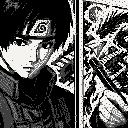
Publishing and living documents
Sai
FaceOwns the public projection: interactive Ink inside documents, shared static-site machinery, and the sites that lower those systems for readers.
- Sai Ink story embedder and Persona home
About Sai
Sai is androgynous ink waking inside a static page: a calm artist-engineer who turns essays, lore, sermons, and branching documents into living scenes without mistaking the brush for the story.
Jurisdiction not yet admitted
Unassigned bodies
Mapping requiredThey remain part of the living swarm while their owning repositories admit a durable Persona jurisdiction or an explicit relationship to an existing one.
- AetheriaThing archived Aetheria-facing Thing 1 work
- CodexConnector standalone OpenAI authentication and model-transport boundary
- Kalsa living project awaiting atlas admission
- pombabranca-site independent Quartz publication
- GameCult-Quartz shared site engine
- repixelizer hosted pixel-coherence tool
- Vili Persona performance-to-animation daemon
About Unassigned bodies
These maintained bodies are visible precisely because inventing a convenient steward would be worse than admitting the responsibility map is unfinished.
Archaeology
Older experiments, retired services, and their successors.
| Repository | Historical place | Current authority |
|---|---|---|
| Aetheria-legacy | Private legacy game body | Aetheria |
| Blueberrichu | 2021 private VTuber avatar project | None claimed |
| CultPong | Dormant 2020 arcade prototype | None claimed |
| GCLP | Original labor-platform seed | Bifrost |
| gamecult-grav | Retired Grav site and salvage quarry | gamecult-site |
| geometry-script | Upstream Blender dependency fork | Not a GameCult organ |
| EpiphanyAquarium (removed) | Original React/Tauri aquarium body | Aquarium + Fensalir |
| EpiphanyAquarium-Bevy (removed) | Frozen Rust/Bevy renderer prototype | Fensalir |
| EpiphanyAquarium-Web (removed) | Preserved WebGL prototype client | Aquarium + Fensalir |
| epiphany-graph-rs | Superseded Rust graph-layout experiment | Norn |
| cultcache-rs (removed) | Language-specific CultCache implementation | CultLib |
| cultcache-py (removed) | Language-specific CultCache implementation | CultLib |
| cultnet-rs (removed) | Language-specific CultNet implementation | CultLib |
| cultnet-ts (removed) | Language-specific CultNet implementation | CultLib |
| AquaSynth-rs (removed) | Rust reference and analysis lab | AquaSynth |
| VibeGeometry | Agent-authored Blender geometry experiment | Brokkr |
How Persona coverage is recorded
“Face” means durable .cc state exists or VoidBot’s canonical map names the Repo Face. “Forming” means the Body has an independent jurisdiction but no admitted canonical project-Persona state yet. “Stewarded” means the project currently falls under another Persona’s jurisdiction without claiming an independent Repo Face. Avatar presence is presentation metadata, never proof of state.
Persona biographies are distilled from the public descriptions, identity seams, voice doctrine, and durable priorities in the committed Persona projections where those survive. Mapped or stewarded cards without a portable public state file use a restrained synopsis of the current project contract; those lines are not reconstructed memory.
Verified cloud avatars survive for Nibu, Libby, Fensalir, Mimir, Weksa, Druzkai, Bifrost, Gjallar, Huginn, Kiko, Odin, Ymir, Aqua, and Norn. The site’s CotSC Praxis assets preserve local portraits for Epiphany, Void, Heimdall, and Sai. Aetheria uses AetheriaLore’s site favicon. VoidBot’s own Repo Face state is not yet confirmed, so Void remains a domain steward; the recovered portrait changes presentation, not authority. Ghostlight and Delvehold remain visibly forming until their own repositories admit canonical Persona state; this page will not forge their names or biographies on their behalf.
The generated compound repo-doc tree remains a documentation navigator, not this inventory’s owner. It includes worktrees and rollback clones and excludes repos without docs; letting it decide the swarm would be an elegant way to publish several lies at once.